
Coconut cube charcoal: The quality of charcoal can significantly influence the overall hookah experience. Users expect steady heat, long burning sessions, and minimal ash during use. For distributors and retailers, these characteristics become even more important when products are purchased in large quantities. Coconut cube charcoal offers a practical option for businesses seeking consistent performance and sustainable raw materials.
Produced from coconut shell charcoal, these briquettes are commonly manufactured in uniform cube shapes. Their standardized form makes them convenient to handle, arrange, package, and transport. Indonesia has strong potential as a production base because its extensive coconut industry provides access to suitable agricultural materials for charcoal manufacturing.
What Is Coconut Cube Charcoal?
Coconut cube charcoal is a type of compressed charcoal briquette made from processed coconut shells. The shells are first carbonized before being crushed into charcoal particles. Manufacturers then mix the material with a suitable binder and compress it into evenly shaped cubes.
The production process determines many of the charcoal’s final characteristics. Proper carbonization helps develop suitable carbon content, while controlled compression improves density and structural strength. Drying is equally important because excessive moisture can affect ignition and burning performance.
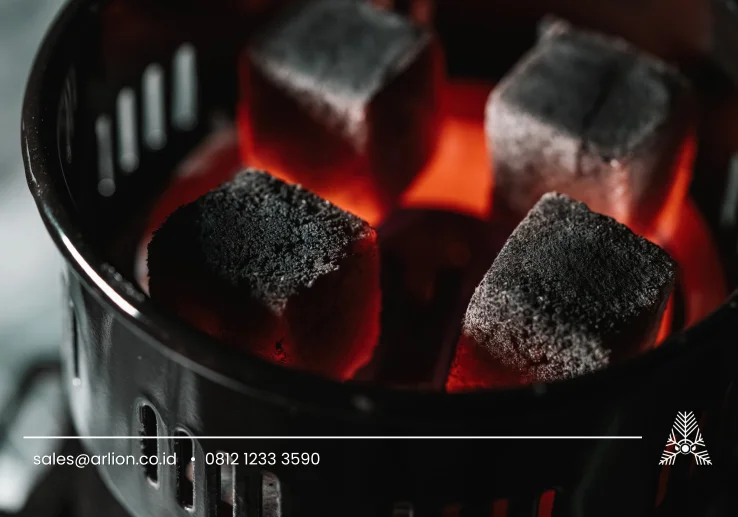
Uniformity is one of the main advantages of cube-shaped briquettes. Similar dimensions allow users to arrange charcoal pieces more easily and achieve more predictable heat distribution. This makes the product particularly suitable for hookah lounges, shisha establishments, and retail consumers.
Why Coconut Charcoal Works Well for Hookah
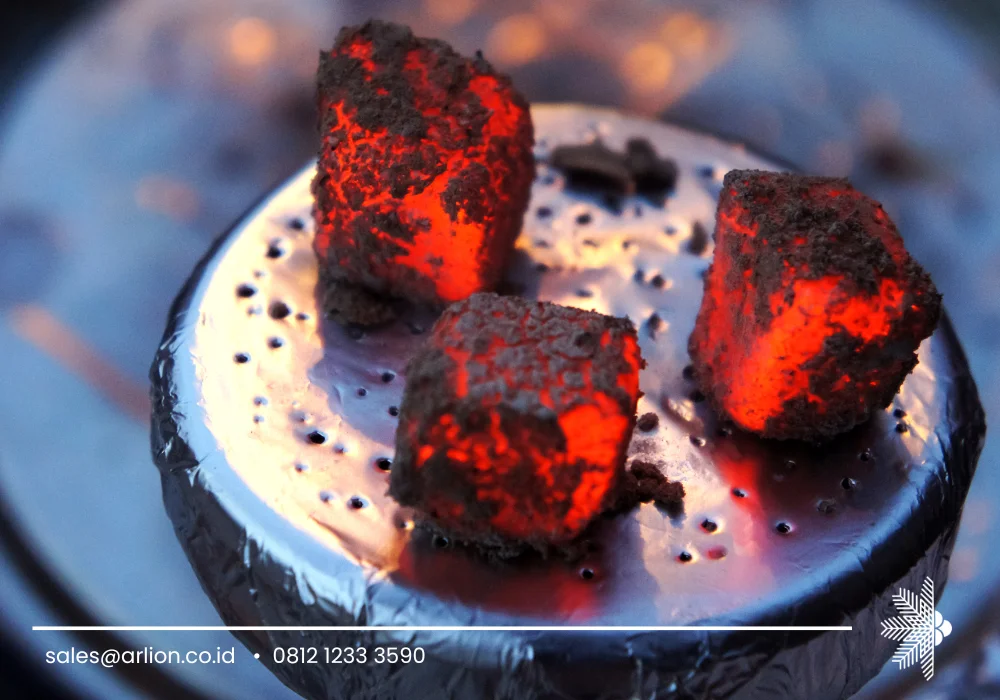
Hookah sessions often require charcoal that can maintain heat for an extended period. Coconut shell briquettes are valued for their ability to provide steady heat when properly manufactured. Their dense structure allows the charcoal to burn gradually instead of disappearing too quickly.
Low ash production is another characteristic that attracts hookah businesses. Excessive ash can create additional cleaning requirements and interfere with heat management. High-quality coconut charcoal can minimize this issue while providing a cleaner and more convenient experience.
The cubes are also easy to position around a hookah bowl. Their consistent shape helps users manage the amount and distribution of heat according to their preferences. For commercial lounges, this can make preparation and service more efficient throughout busy operating hours.
Manufacturing Process and Product Quality
A reliable charcoal product starts with suitable raw materials. Coconut shells must be properly prepared before entering the carbonization process. Controlled carbonization removes moisture and volatile components while converting the shells into carbon-rich charcoal.
Once carbonized, the material is crushed and processed into a consistent powder. It is then mixed with a binder and controlled moisture content before being compressed into cube-shaped briquettes. Manufacturers need to maintain consistent pressure during this stage to prevent variations in density.
The drying process follows compression and requires careful monitoring. Properly dried briquettes generally provide more predictable ignition and combustion. Before packaging, manufacturers can conduct quality inspections to evaluate moisture, ash, density, fixed carbon, dimensions, and burning duration.
These quality checks are especially important for export products. International buyers need confidence that future shipments will provide the same characteristics as their initial orders. Consistent manufacturing therefore becomes an important part of a successful long-term supply relationship.
Benefits for Wholesale and Retail Businesses
For wholesalers, product consistency can simplify inventory management and customer distribution. Uniform briquettes are easier to count, package, stack, and transport. Their standardized appearance also creates a more professional presentation for retail customers.
Retailers can offer coconut charcoal as an alternative to conventional charcoal products. Its coconut-based origin may appeal to consumers who value products made from agricultural resources. At the same time, its practical burning characteristics provide a strong functional reason for choosing the product.
Private-label businesses can also take advantage of customized packaging opportunities. Manufacturers may provide different box sizes, printed branding, logos, and packaging configurations. This allows distributors to create their own charcoal brands without establishing a production facility.
For businesses with growing demand, production capacity should be considered carefully. A manufacturer needs to maintain consistent quality while handling larger orders. Reliable production planning can prevent supply disruptions and support expansion into new markets.
Sustainable Potential of Coconut Shell Charcoal
Coconut charcoal provides an interesting approach to resource utilization. Coconut processing generates shells that can be transformed into useful charcoal instead of being left as agricultural waste. This creates additional value within the coconut supply chain.
The use of coconut shells can also reduce dependence on conventional hardwood materials. For businesses focused on responsible sourcing, this characteristic provides an opportunity to communicate a more sustainable product story.
Sustainability alone, however, should not determine product selection. Buyers should still evaluate performance, manufacturing standards, packaging quality, and supplier reliability. A successful product needs to combine environmental value with consistent commercial performance.
Choosing a Reliable Coconut Charcoal Supplier
International buyers should evaluate several factors before selecting a manufacturer. Production experience, raw material quality, factory capacity, technical specifications, quality control, and export capabilities can all influence the purchasing experience.
Requesting samples is one of the most practical ways to assess a product before placing a large order. Buyers can examine ignition, burning duration, heat consistency, ash production, and physical durability during testing.
Clear communication also helps prevent problems during international transactions. Specifications, packaging requirements, quantities, production schedules, and shipping arrangements should be discussed before confirming an order.
With the right manufacturing partner, coconut cube charcoal can serve as a dependable product for hookah, shisha, wholesale, and private-label markets. Its uniform shape, stable burning characteristics, and coconut-based raw material make it an attractive choice for businesses seeking quality charcoal from Indonesia.
For more information, please contact WhatsApp (+62) 812-1233-3590 or email.
